The ServiceUp Platform

More repairs, same team
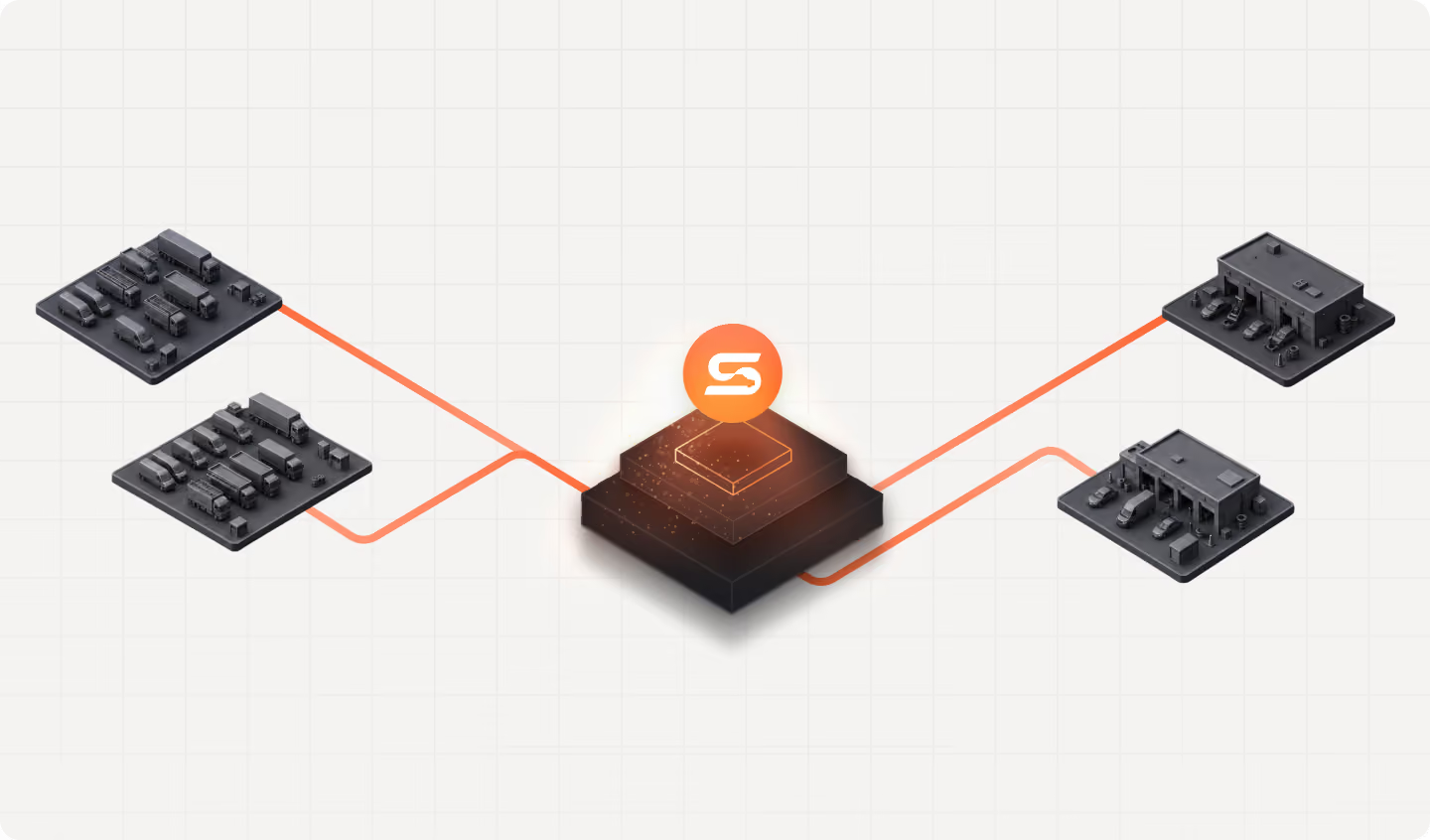
Intake, handoffs, updates, and follow-ups run inside ServiceUp and stay in sync with the systems you already use. Adding vehicles stops meaning adding coordinators.
Faster to the right shop
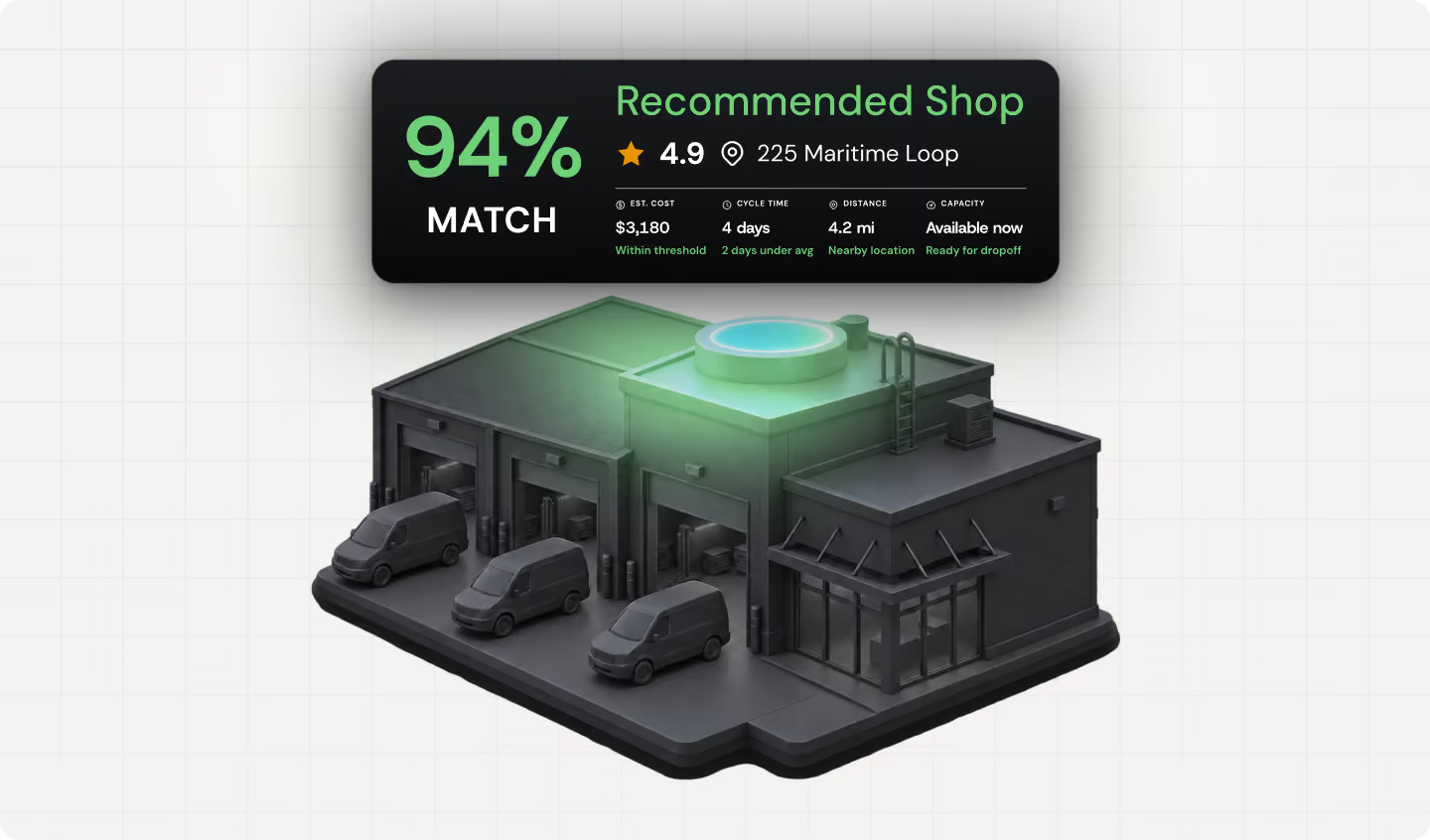
Every repair goes out against your fleet profile and shop preferences, yours, ours, or both. The network adjusts as performance data comes in, so routing gets sharper the longer you run.
Lower cost per repair
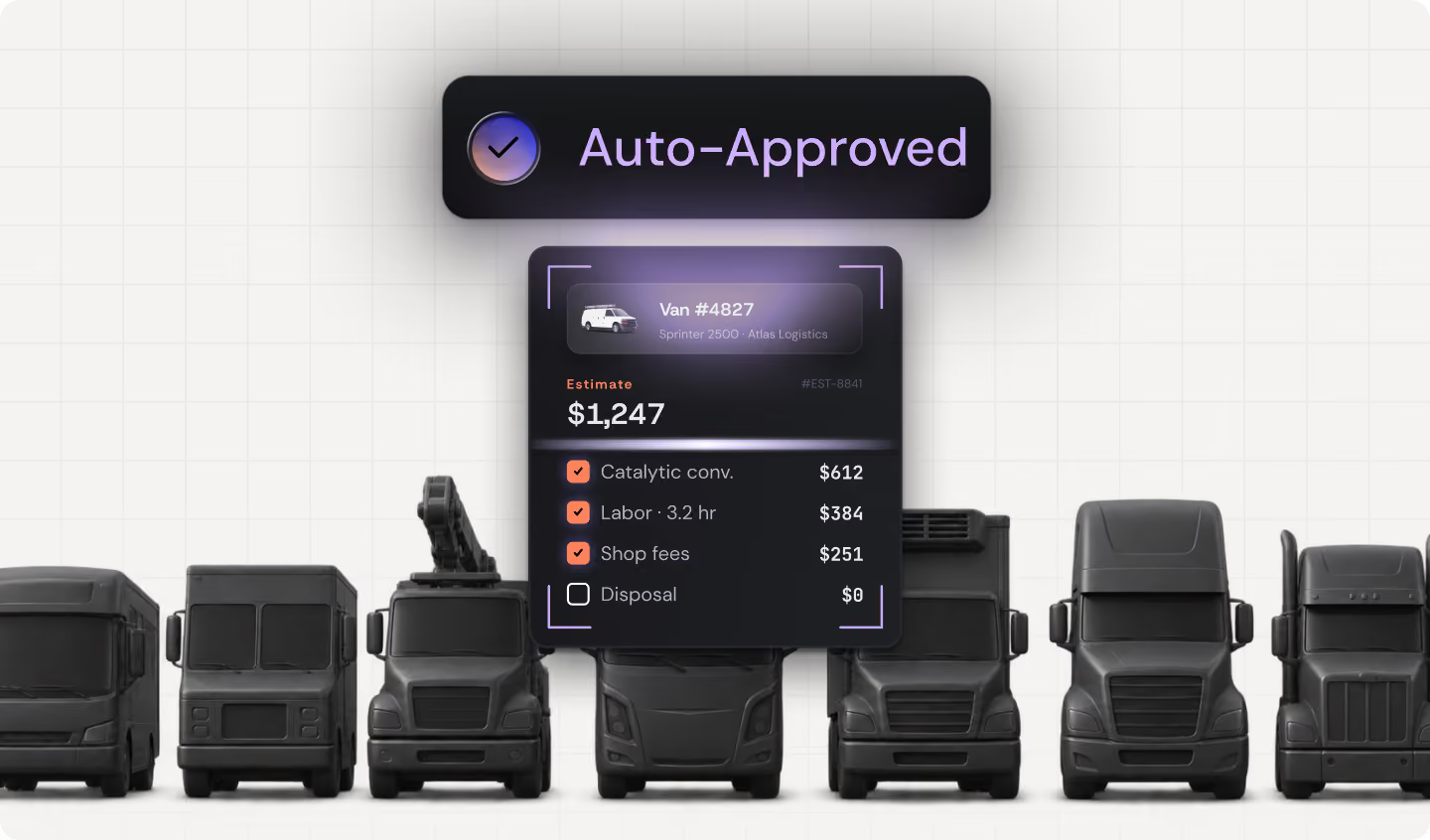
Every estimate line is audited against your pricing, warranty, and maintenance policies before anyone sees it. Flags go up, valid repairs get approved in seconds.
Nothing slips through the cracks
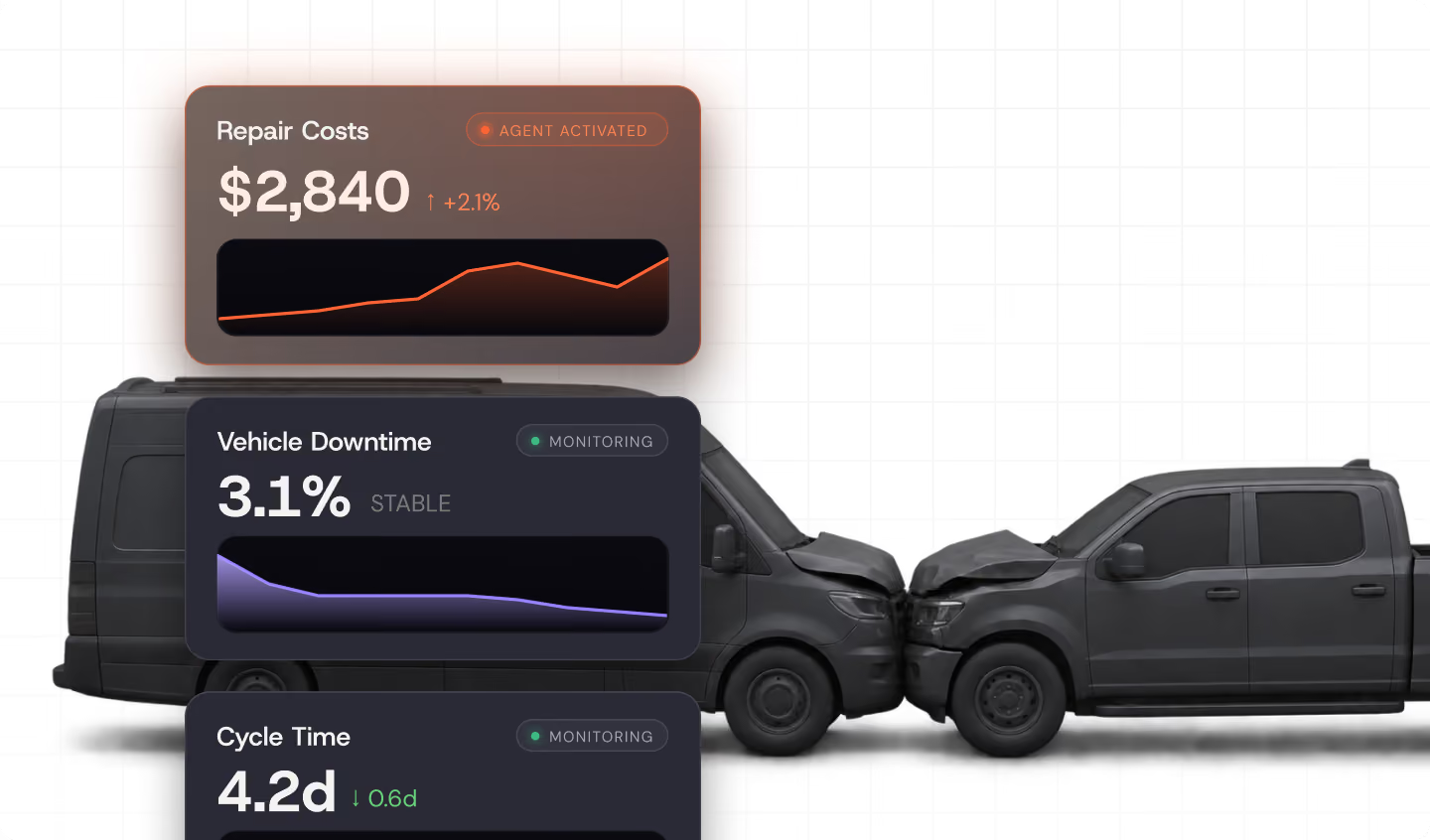
Slipping cycle times, cost spikes, and missed SLAs get caught and escalated before a vehicle is stuck out of service. Your team hears about a problem from ServiceUp, not from a driver.
Powered by AI Repair Agents

Every repair moves on its own.

Nothing waits on a handoff

Intake, assignment, updates, and follow-ups move on their own and sync back to the systems you already run. Your team stops carrying repairs between steps.
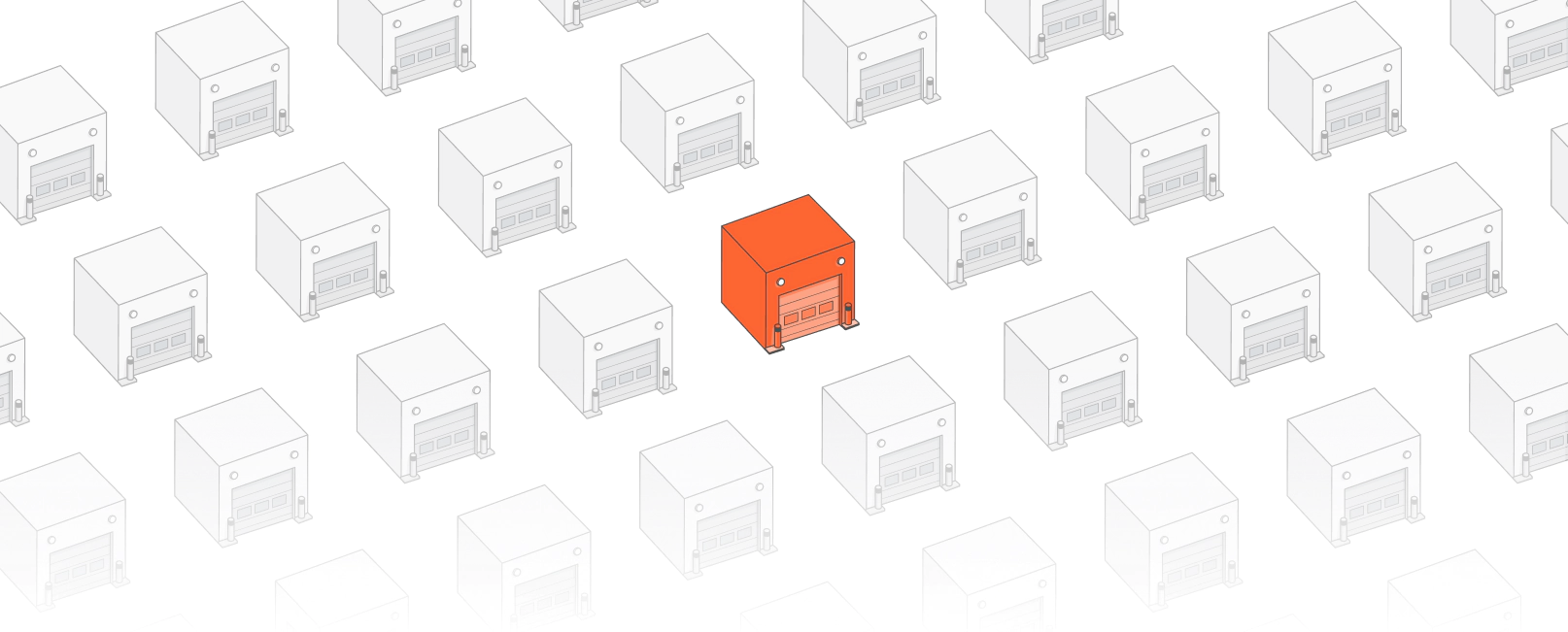
The right shop, without a search

Every repair matches against your network on location, capability, availability, and past performance. Your shops, ours, or both. Nobody makes a call.
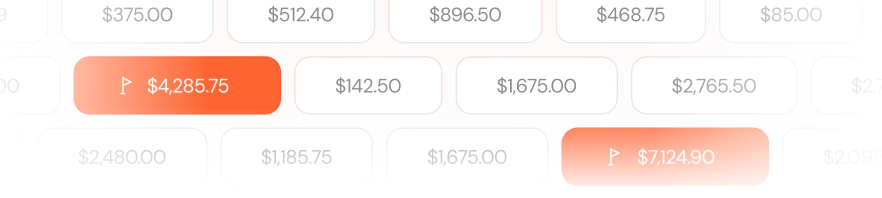
Every line checked before approval

Estimates run against your pricing, warranty, and maintenance policies before anyone sees them. Exceptions get flagged. Clean work clears in seconds.

Delays surface before they cost you

Shop silence, parts delays, and slipping completion dates surface early. Your team finds out before the driver does.
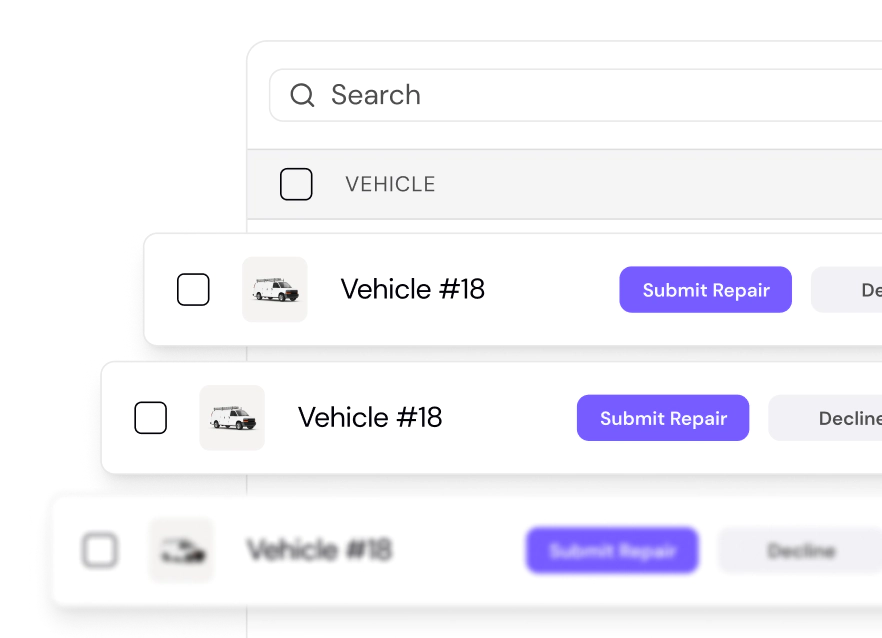
Breakdowns that never happen

Vehicle data flags a service need before it fails, matches it to a capable shop, confirms availability, and has the repair ready for approval.

Control Modes

You're Always in Control of
Every Repair

Manual
You run.

Agents observe.

Agents surface recommendations. Your team reviews and approves every action.

Co-pilot
Agents propose.

You approve.

Agents take action up to your defined thresholds. Anything above that escalates to your queue.

Autopilot
Agents run.

You observe.

Agents operate end-to-end against your policies. Your team steps in only on true exceptions.

How it works

From the first alert to the final invoice.

ServiceUp runs every handoff, decision, and update in between. Your team sets the rules and watches it happen.

01
Takes the request
Step 01

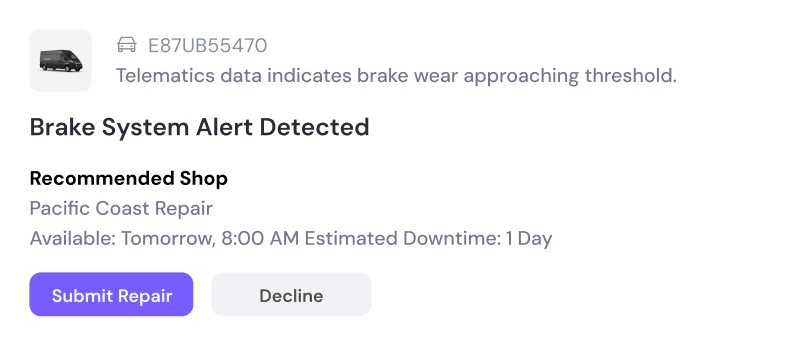
Vehicle data flags a service need before it fails, matches it to a capable shop, confirms availability, and has the repair ready for approval.
02
Picks the shop
Step 02

Location, capability, availability, and past cycle times decide where it goes. Your shops, ours, or both. The network sharpens as performance data comes in.

03
Audits the estimate
Step 03

Each line runs against your policies and what this shop charged for the same job before. Exceptions get flagged. Clean work clears in seconds.

04
Monitors and Acts
Step 04

We began standardising workflows and processes, enabling more reliable delivery while maintaining a high level of design quality.

2030
Pays the shop
Step 05

Every invoice line goes back against the approved estimate. Matches get paid. Gaps get flagged and settled with the shop before a dollar moves.

Proof in Performance

32
%
LESS DOWNTIME
21
%
LOWER REPAIR COSTS
62
%
LESS MANUAL COORDINATION
100
%
REAL-TIME VISIBILITY
Testimonials

Real Fleets. Real Results.

We faced challenges managing rental fleet repairs with slow cycle times and rising costs. ServiceUp transformed our process with speed, efficiency, and savings. We’re thrilled and expanding nationwide very soon.
Richard Pickle
Operations Manager
Before ServiceUp, managing collision repairs was complex and slow. Their centralized tracking and shop insights delivered faster repairs, lower costs, and peace of mind knowing everything is managed efficiently.
Bennett Harris
Director of National Fleet Operations, Voyager
Before Serviceup, I would take hours out of my workday, or take one of my staff out of rotation to handle van repair for me. ServiceUp now saves my business hours, sometimes days of productivity with every repair.
Craig Radley
Fleet Manager
ServiceUp transformed our fleet repairs with turnaround times cut in half. Their customer service is top-notch, incredibly responsive, and they consistently get the job done right.
Nolan Fawthrop
Manager, Operations & Strategy
I finally was able to get complete insight into my entire fleet's repair process with ServiceUp. They make it easy to manage my repairs across my 12 regions.
Cody Fisher
Operations Manager

FAQs

Answers on how ServiceUp works. If yours is not here, ask us.
What is ServiceUp for Fleets?
The repair layer for your fleet. Every repair order, shop conversation, estimate, approval, and invoice lives in one place, and agents move each one along without your team chasing it. You get real-time status on every vehicle, cost data you can actually report on, and a shop network built around how your fleet runs.
What types of fleets does ServiceUp manage?
Fleets from 25 vehicles to over 5,000, across Classes 1 through 8: sedans, vans, SUVs, box trucks, and light, medium, and heavy duty trucks. Our customers run rental and mobility fleets, last-mile delivery and logistics, construction and field services, public utilities, passenger transportation, and service businesses like HVAC.
How do I know if ServiceUp is right for my fleet?
If you run 25 or more vehicles in Classes 1 through 8 and your repair coordination happens over phone calls, email threads, and spreadsheets, you're who we built this for. The tell is usually that nobody can say what repairs cost last quarter, and nobody owns the process end to end.
How do repairs get started?
Five ways. Your fleet management system or fleet management company generates the repair order automatically. A driver scans a QR code or texts a VIN (Vehicle Identification Number) with what's wrong. A fleet manager submits on a driver's behalf from the ServiceUp portal. A mobile vendor logs on-site and submits directly. Or telematics files it straight from the vehicle's diagnostics. However it starts, the Intake Agent turns it into a structured repair order.
Can I use my own shops?
Yes. Bring your own, use ours, or run both. We sync with your fleet profile and shop preferences to build a network around your operation rather than handing you a directory. It stays fluid too, adjusting as performance data comes in, so routing gets sharper the longer you run on it.
How does ServiceUp reduce vehicle downtime?
Downtime is a decision problem, not bad luck. Every decision that takes a day instead of a second costs you an asset. Agents route the repair to the right shop the moment it comes in, audit the estimate against your policies and approve it in seconds, and watch the ECD (Estimated Completion Date) so a slipping job gets escalated before it turns into a week. Fleets running ServiceUp see 32% faster cycle times.
How does ServiceUp control repair spend?
Every estimate gets audited against your pricing, warranty, and maintenance policies before it reaches anyone on your team. Overcharges get flagged, valid repairs get approved in seconds, and price differences between shops show up as a pattern instead of a one-off surprise. Fleets running ServiceUp see 21% lower repair costs, and because invoices match approved estimates, month-end stops being a guessing game.
How does ServiceUp handle EV and ADAS work?
Shops are qualified for EV and ADAS (Advanced Driver Assistance Systems) work by region, so high-voltage and calibration-heavy jobs only route to shops that can actually do them. You get fewer reworks, fewer failed calibrations, and a documented trail on every job for your risk team.
What is fleet repair software, and how is ServiceUp one?
Fleet repair software runs the repair itself: intake, shop selection, estimates, approvals, status, and payment. That's a different job from fleet management software, which tracks assets, mileage, utilization, and maintenance schedules. ServiceUp runs the work rather than recording it. Our agents make the routine decisions so your team only handles the exceptions.
How long does implementation take, and what breaks?
Nothing breaks. We work inside your existing systems and vendor contracts, so there's no rip and replace. Onboarding is mostly a matter of getting your shop preferences, policies, and approval thresholds into the platform. Start in Manual with agents observing, then move to Co-Pilot or Autopilot once you've watched them run clean on your own work.