
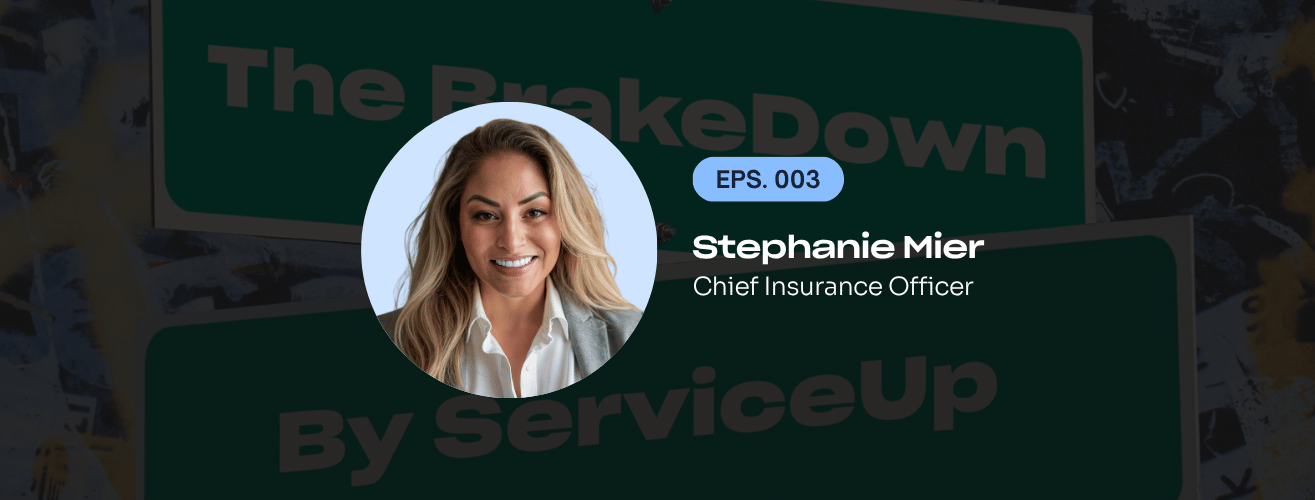
Kam Thandi and Stephanie Mier spend this episode of The BrakeDown on what happens between an insurer and a repair shop after a vehicle is damaged. Stephanie brings years of experience from the insurance side, and the conversation covers estimate accuracy, subrogation, how technology is changing claims processing, and the relationship between carriers and the shops doing the work.
It also takes on a misconception that shows up constantly: that insurers are looking for reasons not to pay.
Takeaways from the episode
- Insurance is a working part of the auto repair process, not a step that happens off to the side.
- Relationships and connections carry real weight in how claims move.
- Writing an accurate estimate is one of the harder problems in claims processing.
- Technology is changing how claims get handled, and quickly.
- Subrogation gets overlooked and matters a great deal for cost recovery.
- Insurers are responding to rising repair costs through closer partnerships.
- The belief that insurers do not want to pay for damage is widespread and mostly wrong.
- AI is taking meaningful time out of claims processing.
- The trend points toward stronger partnerships between insurers and repair shops.
- Changing how the industry talks about insurance would improve how it works together.
Subrogation, in plain terms
When one of your vehicles is damaged by somebody else, your carrier may pay the claim first and then pursue the at-fault party's insurer to recover what it paid. That recovery process is subrogation, and when it works you get your deductible back and the loss stops sitting on your claims history as though it were yours.
Whether it works is decided in the first 48 hours, by a driver holding a phone at the side of a road. A file with photographs from all four corners, the other party's insurer and policy number, a police report number, and a written driver statement gets pursued. A file with a name and a phone number gets written off, and the write off is invisible until somebody reviews recovery rates a year later.
The other half of the problem is the estimate. A first estimate written from photographs rarely survives teardown, so supplements follow. Every supplement is another approval, another wait, and another day the vehicle is not working. That is the same calendar problem a fleet manager sees from the other side of the wall.
What this means for your operation
- Give every driver a one page incident card: photograph all four corners before the vehicle moves, capture the VIN (vehicle identification number) plate, collect the other party's documents, and record the police report number.
- Set the dollar threshold below which you repair out of pocket rather than file, and make sure dispatch knows it. Small claims that will not clear a deductible cost more in loss history than they return.
- Require the estimate and every supplement in writing with photographs attached, from the shop, before the work happens.
- Track days from first notice of loss to repair authorization. In most fleets that window is where the calendar quietly disappears, and almost none of it belongs to the shop.
- Once a year, compare recovered subrogation dollars against paid collision losses. If recovery is low, the cause is usually documentation at the roadside rather than anything your carrier did.
Where to skip to
- 00:00 Introduction to insurance and auto repair
- 04:00 Challenges in the insurer and repair shop relationship
- 09:29 The role of technology in insurance claims
- 10:34 Understanding subrogation
- 12:51 Evolving partnerships between insurers and repair shops
- 14:19 High tech repairs and EVs (electric vehicles)
- 18:07 Future trends in insurance and auto repair
- 19:47 Concluding thoughts on industry improvements
ServiceUp manages the repair half of a collision, whoever ends up paying for it: intake, routing to a shop that can actually do the work, estimate review against your policies, and the follow up until the vehicle is released. The claim stays between you and your carrier. More at serviceup.com/fleets.
.png)

.png)


