
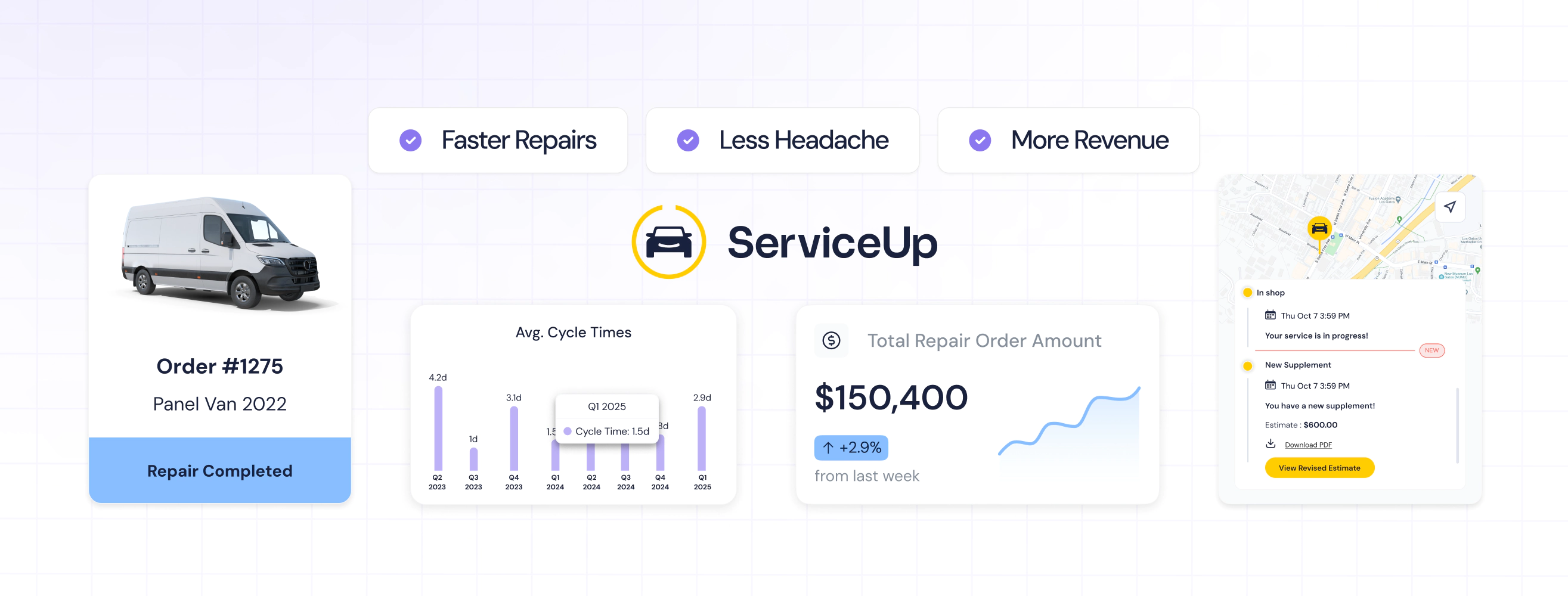
Repair management is a category most fleets have no software for, because it sits between the FMS (fleet management system) that records the vehicle and the shop that fixes it. That gap is usually staffed by a person with a phone and a spreadsheet.
ServiceUp is the agentic repair platform for modern fleets. It handles the repair itself, from intake through payment, and it runs alongside whatever system of record you already use. What follows is what it does, how the control works, and what it deliberately does not do, so you can decide whether it fits before you take a call.
What repair management has to do
Every repair is the same sequence, whether it is a brake job on a cargo van or collision work on a Class 6 box truck.
Something reports a problem. Somebody decides where the vehicle goes. The vehicle gets there. A shop writes an estimate. Somebody checks that estimate against what the repair should cost, whether it is under warranty, and whether it matches the maintenance policy. Somebody approves it. The work happens. Someone tracks the ECD (estimated completion date) and tells the fleet when it slips. The vehicle comes back. The invoice gets paid.
Ten steps, and in most fleets eight of them are manual. The failure modes are specific and boring: the van that sits three days waiting on a callback, the estimate approved unread because the vehicle was needed Monday, the ECD that moved twice without anyone telling dispatch, the markup nobody had time to catch.
The four core capabilities
Unified Repair Workflow
Every handoff, update, and follow-up is handled by agents that integrate directly into existing systems. The point is not another dashboard to log into. The point is that coordination work stops landing on a person.
Shop Network and Smart Routing
ServiceUp syncs with your fleet profile and shop preferences to build a network specific to you, then routes every repair to the right shop automatically. This is not a static directory. Bring your own shops, use ServiceUp's, or run both. The network stays fluid and adjusts as performance data comes in, so a shop that starts running long on turnaround stops getting your work.
Automated Estimate Review and Approval
Every estimate is audited against pricing, warranty, and maintenance policies. Overcharges get flagged and valid repairs get approved in seconds. This is the capability that moves cost most directly, because estimate review is the step fleets skip when they are busy, which is always.
Real-Time Repair Intelligence
Agents monitor repairs 24/7 and resolve slipping cycle times, cost spikes, and missed SLAs (service level agreements) as they happen rather than at month end.
The six agents
- The Intake Agent opens the repair from whatever source it arrived through and gathers what the shop will need.
- The Shop Routing Agent selects the shop based on your preferences, the repair type, and shop performance.
- The Estimate Agent reads the estimate and compares it line by line against pricing, warranty, and policy.
- The Approval Agent approves what clears your thresholds and escalates what does not.
- The Fraud Detection Agent looks for the patterns that say a charge should not be paid.
- The Communications Agent handles the back and forth with the shop, the driver, and your team.
Repairs come in from wherever they start: FMS or FMC (fleet management company) initiated, driver initiated by QR code or by texting a VIN (vehicle identification number), fleet manager initiated, mobile vendor initiated, or telematics initiated.
Three control modes
How much the agents do is your call, and it can differ by repair type, cost band, or location.
Manual
You run. Agents observe. Agents surface recommendations and your team reviews and approves every action. Most fleets start here.
Co-pilot
Agents propose. You approve. Agents act up to your thresholds, and anything above escalates to your queue. A common setup is autonomous approval under a set dollar amount, with everything above it routed to a manager.
Autopilot
Agents run. You observe. Agents operate end to end against your policies, and your team steps in only on true exceptions.
What ServiceUp is not
Being clear about scope saves everybody a discovery call.
It is not an FMS. ServiceUp does not replace Fleetio, Samsara, Geotab, or whatever you use for asset records, telematics, and compliance. Your FMS manages your fleet. We manage your repairs.
It is not an FMC. ServiceUp does not lease you vehicles, hold your titles, or run your fuel program.
It is not a shop marketplace. You are not posting a job and collecting bids. Routing is driven by your preferences and by shop performance data, not by whoever answers first.
And it does not handle fuel management, route planning, driver scheduling, or hours-of-service compliance. Those belong to other systems, which is why the integration matters.
How to evaluate it against what you have
Four questions worth answering with your own data before any vendor conversation.
- What is your average repair cycle time, measured from the moment the problem is reported to the moment the vehicle is back in service? Most fleets measure from when the shop opened the RO (repair order), which hides the worst part.
- How many of your estimates last quarter were checked line by line against a pricing or warranty policy before approval? If the honest answer is a small fraction, that is your cost exposure.
- How many hours a week do your people spend on the phone with shops, and what were those people hired to do?
- How many repairs went to a shop because it was the one with an opening rather than the right shop for that job?
Coverage runs light duty through Class 4-8, plus RV and rental fleets. If your problem is that nobody is tracking PM (preventive maintenance) intervals, an FMS solves that and ServiceUp does not. If your problem is that the repair itself takes four days longer than it should and estimates go out unchecked, that is the one ServiceUp is built for.
Results, and the honest caveat
Across fleets running on the platform, the two numbers that move are cycle time and cost: about 32% faster cycle times and about 21% lower repair costs. Both come from the same mechanism, which is removing the waiting and the unchecked approvals. The van that sat three days for a callback does not sit, and the estimate that would have gone through unread gets audited in seconds.
What ServiceUp will not do is fix a fleet with no maintenance discipline. If PM services are being skipped, repairs keep arriving as failures rather than as scheduled work, and a fast repair of a failure is still worse than not having the failure.
ServiceUp automates vehicle repair from intake to payment, for fleets that want coordination to stop being somebody's full-time job. You can see the platform and current coverage at serviceup.com/fleets.

.png)

.png)


